As an educator I have always believed that education is the most stable systems in the world. But the situation in 2026 is proving otherwise.
The ongoing conflicts, especially in the Middle East and Ukraine that not just political or humanitarian crises they are creating a deep global education crisis.
When Classrooms Turn into Survival Spaces:
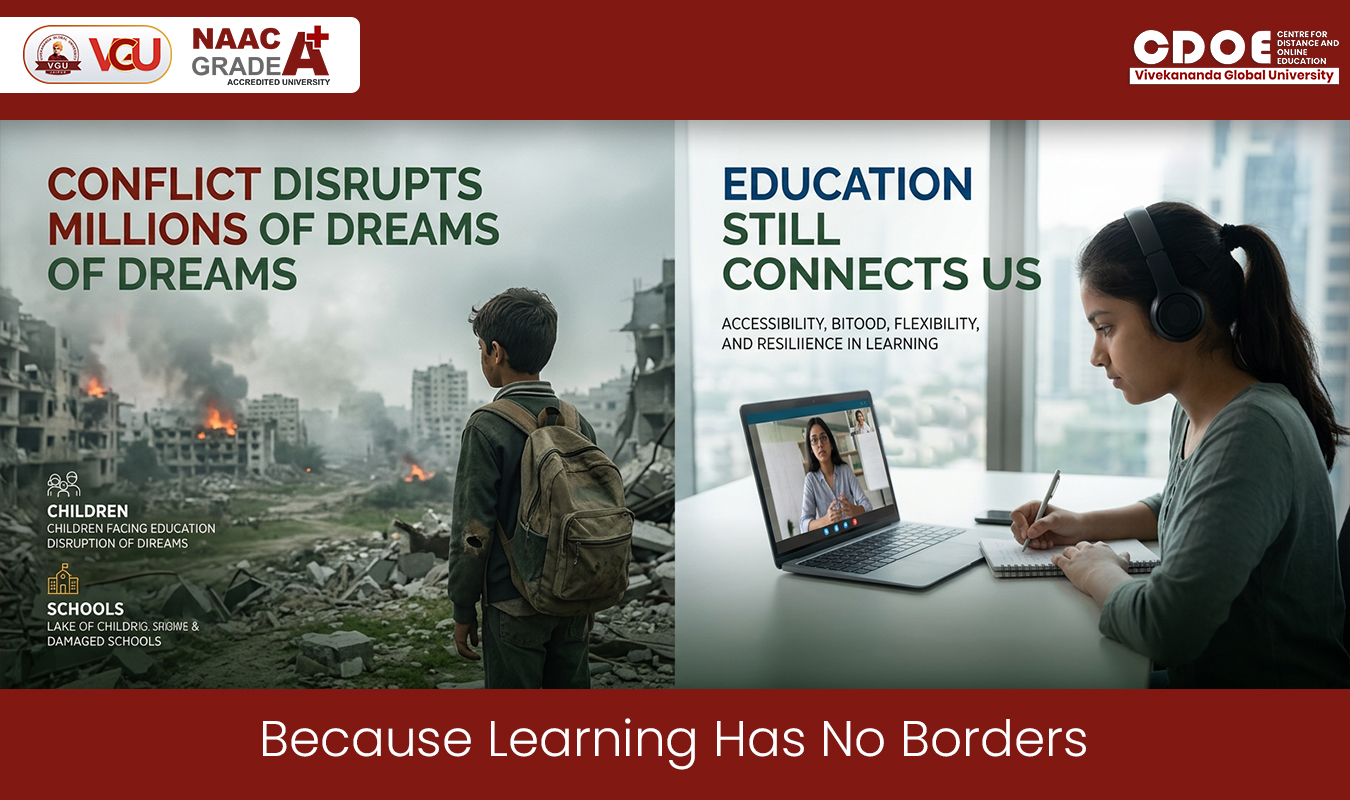
According to reports from organizations like UNESCO and UNICEF millions of students worldwide are facing severe disruptions in their education. In Gaza Strip, more than 90% of school buildings have been damaged or destroyed, highlighting the devastating impact on the education system. Similarly, in Iran, universities and schools have been significantly affected, while in Lebanon, an already fragile education system is now on the verge of collapse. In many of these regions schools are no longer functioning as centers of learning; instead, they are being used as shelters or even bunkers, reflecting the harsh realities faced by students and educators.
Struggles of International Students
This crisis is not limited to local students, international students are equally affected. For instance, Indian students in Iran have faced significant evacuation challenges, making it a serious concern. Similarly, students from Ukraine and other conflict-affected regions are struggling with disrupted education and uncertainty about their academic future. In addition to this, issues such as visa cancellations and constant uncertainty are adding to their stress and anxiety.
Online Education Solution with Limits
Online education could have been the perfect solution in such situations, but the reality is far more complex. In conflict-affected areas, students often face unstable internet connectivity, inconsistent electricity supply, and a lack of proper digital devices, making it difficult to access online learning. As a result, while online education is a helpful alternative, it is not always accessible where it is needed the most. However, in relatively stable regions, it has emerged as a critical lifeline, ensuring continuity in education despite ongoing disruptions.
The Changing Role of Educators
The role of a teacher is evolving rapidly in today’s challenging environment. Educators are no longer limited to delivering academic content; they are also providing emotional support, helping students cope with trauma, and guiding them through uncertainty. In such circumstances, students need more than just academic knowledge they require understanding, stability, and reassurance to navigate these difficult times.
Flexible Education Models
This crisis is a wake-up call for the education system, highlighting the need to strengthen hybrid and online learning, build conflict-ready systems, and prioritize accessibility and flexibility. Online education is no longer optional it is essential. While war disrupts dreams and learning journeys, it also pushes us to improve. If education is truly a right for all, it must be made resilient and accessible in every situation.